- About Us
- Corporate Citizenship
- Corporate Sustainability
- Environmental
Environmental Stewardship
At DNOW, environmental responsibility starts with how we operate and extends through the products and solutions we provide to customers around the world. As a global energy and industrial solutions provider, we focus on reducing our operational footprint through responsible facility management, energy efficiency, emissions tracking, and sustainable business practices. At the same time, we help customers improve environmental performance through innovative products and engineered solutions designed to reduce emissions, improve efficiency, capture resources, and support the evolving energy landscape.
Environmental Highlights
| DryOxo™ launch: DNOW's newest EcoVapor product is designed to enable reductions of up to 100,000 MT CO₂e annually1 | |
| Hokksund, Norway facility reduced energy consumption 20% over three years, completing a full LED lighting conversion in Q1 2025 | |
| Established DNOW's first combined organization GHG emissions inventory covering full year 2025 | |
1 Reduction possible through the continual use of one DryOxo ET2000 unit. Represents estimated annual emissions reduction design capacity as calculated by a third-party environmental consultant; actual reductions depend on customer operating conditions.
Environmental Footprint
Greenhouse Gas (GHG) Emissions
DNOW measures and reports Scope 1 and Scope 2 greenhouse gas emissions in accordance with the GHG Protocol. Both are reported in metric tons of carbon dioxide equivalent (MT CO2e). The MRC Global acquisition significantly expanded DNOW’s operational footprint.
| Global GHG Emissions (MT CO2e) | 2025 |
| Scope 1 (equipment, vehicle fuel & natural gas) | 32,526 |
| Scope 2 (electricity & district heating) | 12,191 |
| Total Scope 1 & 2 (location-based) | 44,716 |
| Total Scope 1 & 2 (market-based)1 | 46,205 |
| Emissions intensity (MT CO2e / $M revenue)2 | 8.5 |
1 Scope 2 (market-based) emissions are 13,679 MT CO2e. See Environmental data table on page 57.
2 Scope 1 + 2 (location-based) emissions divided by unaudited pro forma combined revenue of $5,274 million for the year ended December 31, 2025, as disclosed in the Company’s 2025 Form 10-K. Not comparable to intensity figures reported by either predecessor company. Due to rounding, amounts may not sum to totals presented.
Energy, Water & Waste
Facility energy consumption is a major component of DNOW’s operational footprint, alongside fuel consumed by the Company’s fleet. Energy data is compiled from natural gas and electricity utility bills across global operations, with most facilities sourcing power from local providers.
| Facility Energy by Source (GJ) | 2025 |
| Natural Gas | 142,639 |
| Purchased electricity | 126,172 |
| District heating | 1,850 |
| On-site solar (consumed on-site) | 654 |
| Other heating fuels | 910 |
| Total facility energy | 272,224 |
Fleet and Fuel Efficiency
DNOW’s vehicle fleet is the Company’s largest source of direct emissions, accounting for nearly 80% of Scope 1 emissions and 57% of combined Scope 1 and 2 emissions. Route optimization, fleet efficiency initiatives and freight consolidation help reduce transportation impacts across the network.
In 2025, 449.5 MT CO₂e of DNOW parcel-shipment1 emissions were offset through the UPS Carbon Neutral program.2
| Fleet Fuel Combustion3 | 2025 |
| Total fleet fuel consumption (GJ) | 392,070 |
| Total fleet GHG emissions (MT CO₂e) | 25,305 |
| On-road share of fleet fuel (%) | 97% |
| Non-road equipment fuel share (%) | 3% |
| Renewable share of fleet fuel (%) | 0.1% |
1 Parcels are typically smaller and lighter than bulk freight shipments, with a maximum weight limit of 150 pounds per package.
2 The UPS Carbon Neutral program is certified to CarbonNeutral® Protocol standards. Emissions for enrolled shipments are calculated by UPS and verified by SGS.
3 Fleet includes on-road vehicles and fuel-powered non-road equipment, including propane-fueled forklifts; excludes natural gas combusted at facilities.
Products with Purpose
Emissions Mitigation & Containment
DNOW supplies products that help customers reduce fugitive emissions, which represent both compliance exposure and lost product for operators. Pipe, valves and fittings (PVF) are the core components of industrial fluid and gas systems, and their performance directly determines how well emissions are managed at the facility level.
Reducing Customer Emissions
Low-Emission (Low-E) Valves
Cast and forged valve lines certified to limit fugitive emissions under API 624/641 and ISO 15848-1
Sealless Magnetic Drive Centrifugal Pumps
Eliminate mechanical seal leak points, a primary source of fugitive emissions in fluid handling
High-Performance Spiral Wound Gaskets
Reduce fugitive emissions at pipe connection points
Containment Systems
Reduce leak potential and capture contaminants before release
Lower Manufacturing Footprint
API 5L Steel Pipe
Produced from recycled steel scrap using electric arc furnace technology rather than traditional blast furnace processes
Forged Steel Fittings, Flanges and Bolts
Produced from recycled steel sources
Glass Reinforced Epoxy Piping Systems
Produced with less energy than carbon steel pipe, with additional transport emissions savings from lighter weight
Renewably Produced Pipe
Select pipe product lines produced using wind power, recycled water and wood pellet inputs
Fueling Our Environmental Inventory
EcoVapor Systems
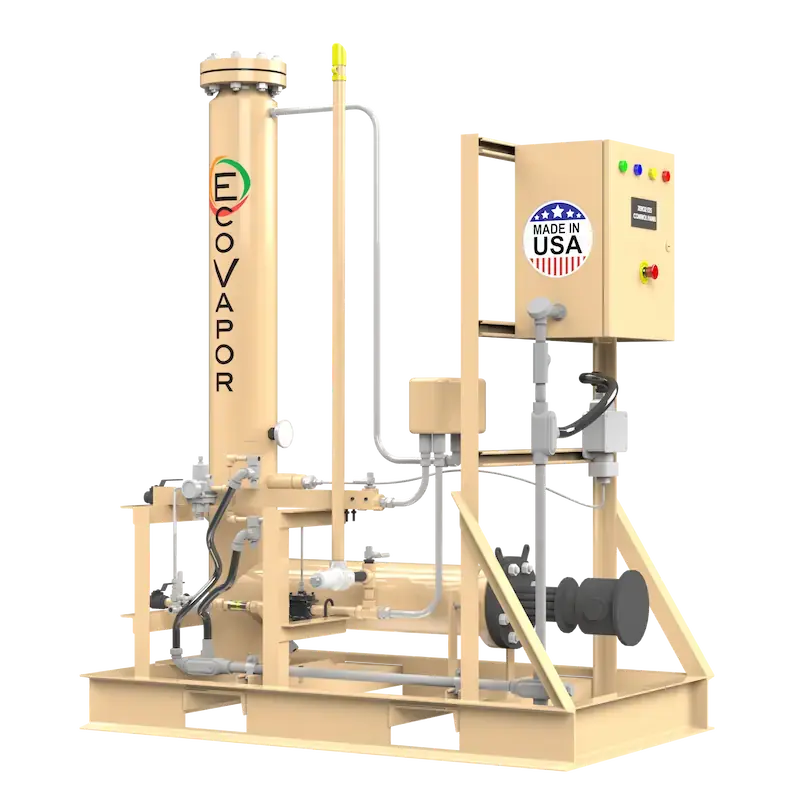
Oxygen Removal Systems (ZerO2™)
Remove oxygen from low-pressure tank gas so it can be captured an sold rather than flared
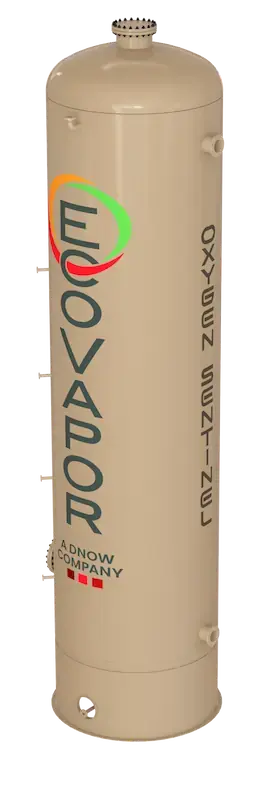
Oxygen Removal for Sour Gas (Oxygen Sentinel™)
Removes oxygen from gas streams containing hydrogen sulfide (H2S, preventing pipeline corrosion and leaks
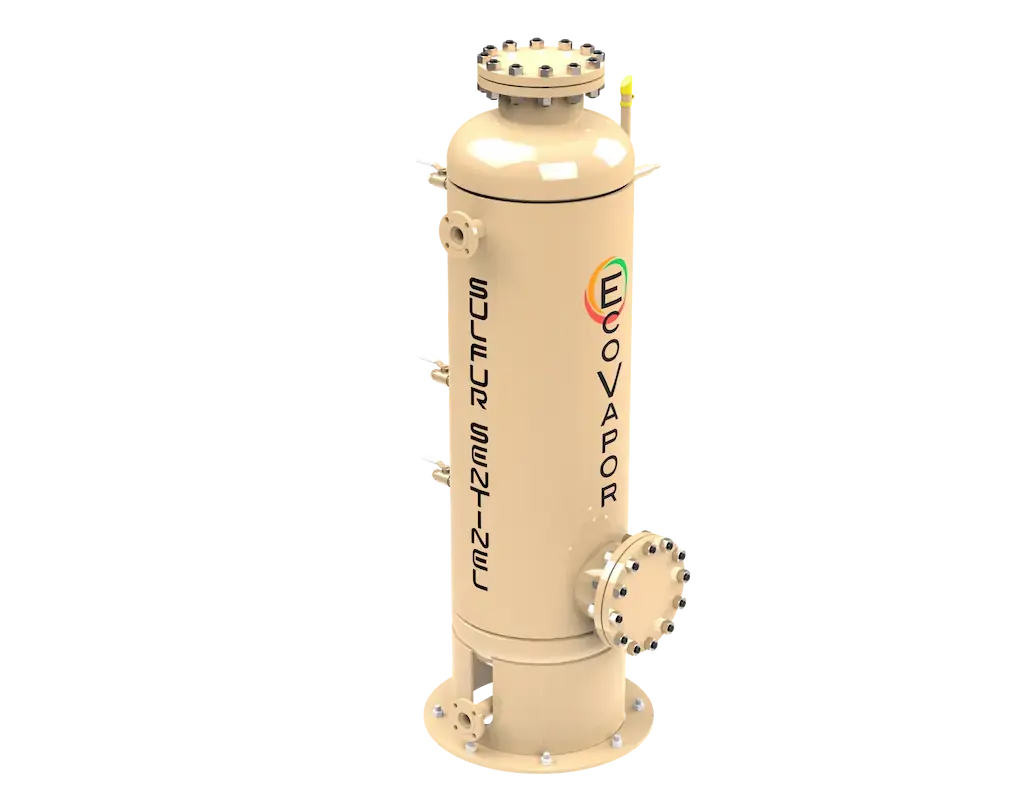
Hydrogren Sulfide Removal Systems (Sulfur Sentinel™)
Removes hydrogen sulfide from gas stream, allowing gas capture and lowering operators’ Scope 1 emissions
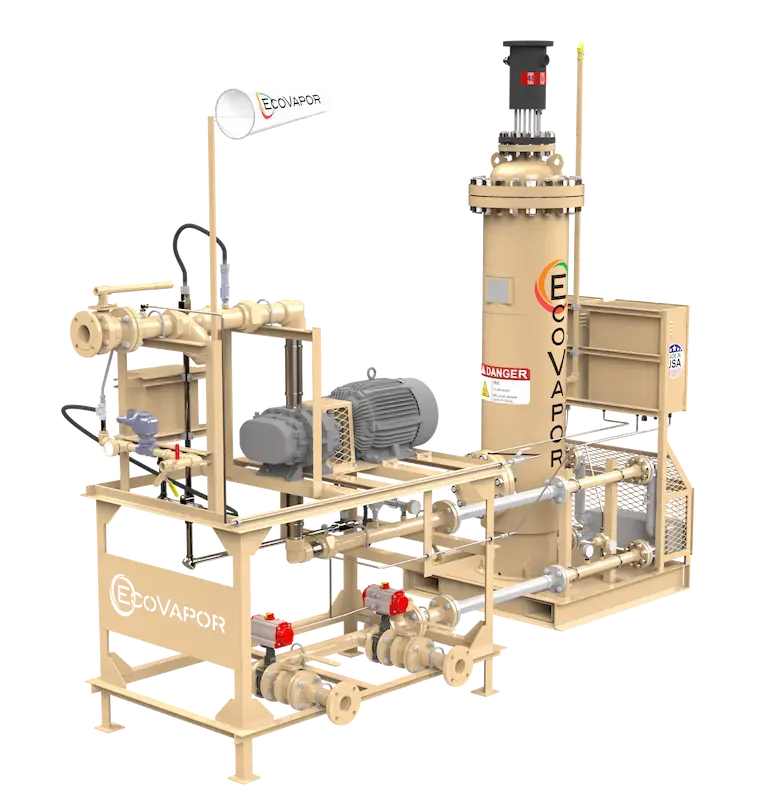
Vapor Management Systems (Tank Commander™)
Captures tank vapor and eliminates tank venting emissions, the most significant source of wellsite emissions
Emissions Assessment (Emissions Scout™)
Monitors and records tank battery conditions and emissions data to identify gas recovery opportunities
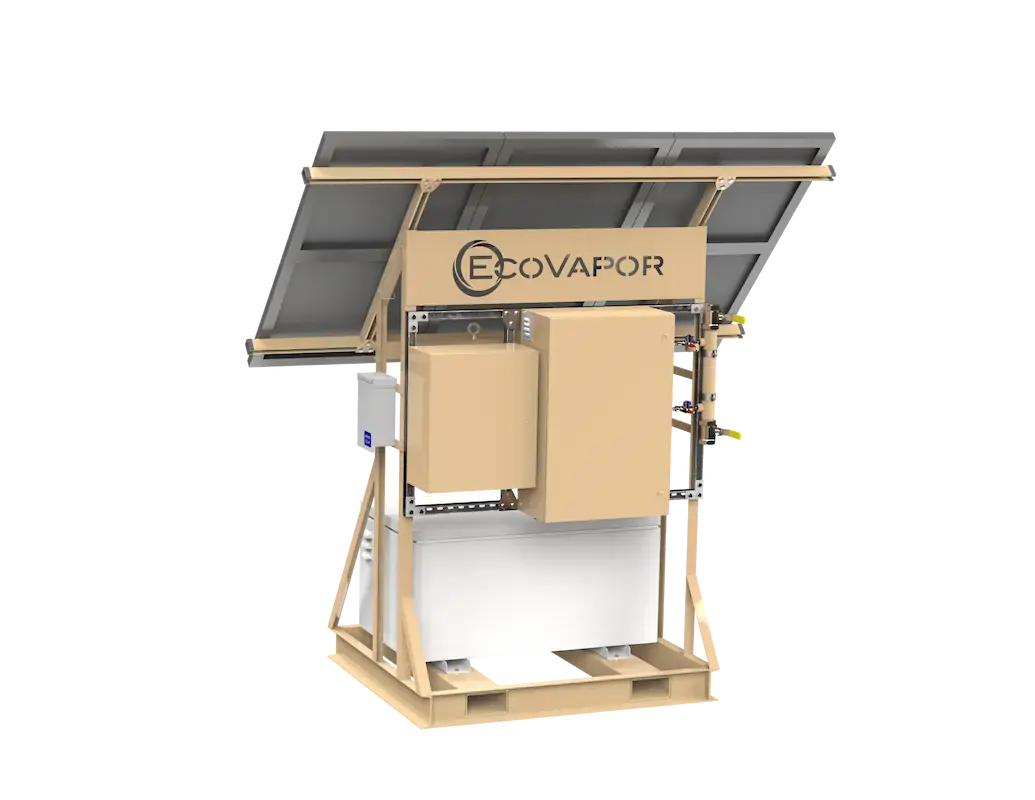
Vapor Management
(Tank Commander™)
Captures tank vapor and eliminates methane venting from storage tanks
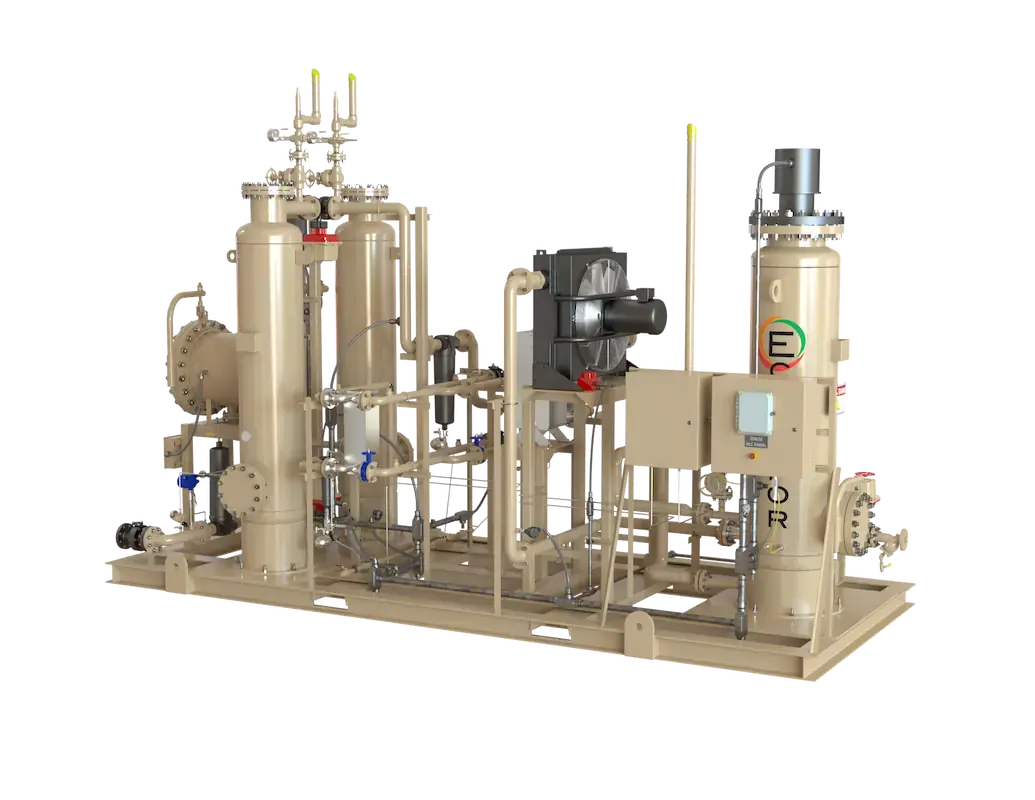
EcoVapor DryOxo™
Oxygen Removal & Gas Drying Systems
In 2025, EcoVapor launched the DryOxo™ line, which eliminates oxygen and removes moisture from natural gas streams in a single process. This purification allows gas to meet strict pipeline specifications so it can be sold rather than vented or flared. A single DryOxo ET2000 unit is designed to enable operators to reduce up to 100,000 MT CO2e annually.1
1 This figure represents estimated annual emissions reduction design capacity as calculated by a third-party environmental consultant; actual reductions depend on customer operating conditions.
Pumps, Production & Process Solutions
DNOW designs and fabricates engineered equipment that reduces emissions, prevents releases and improves operational efficiency at production facilities. Pneumatic controllers and actuators are among the largest sources of methane emissions in oil and gas production, transmission and storage, and several of these solutions target them directly.
|
Solution |
Function |
|
Instrument Air Skids |
Replace wellhead gas with compressed air to drive pneumatic devices, eliminating fuel gas use where site conditions allow |
|
Solar Chemical and Glycol Pumps |
Replace gas-driven pumps that vent methane during operation |
|
Gas recovery Pumps |
Recapture wellhead gas and volatile organic compounds (VOCs) |
|
Sealless Charge Pumps on LACT Units |
Reduce leak points and spills of environmentally sensitive products of custody transfer measurement points |
|
Mechanical Seals |
Provide temporary water transfer capacity across field applications |
|
Horizontal Multistage Centrifugal Pumps |
Support high-pressure CO2 transport, storage and carbon capture applications |
|
Pump and Compressor Energy Audits |
Identify efficiency and emissions-reduction opportunities in installed equipment |
Produced Water Solutions
Produced water, brought to the surface alongside oil and gas during extraction, requires careful management to limit environmental impact. DNOW supports the full produced water lifecycle: transfer, treatment, disposal and reuse. These solutions help customers reduce freshwater consumption and manage produced water in compliance with environmental requirements.
|
Solution |
Function |
|
Separators |
Separate produced water from oil and gas streams for treatment, reuse or responsible disposal |
|
Water Transfer Systems |
Move stored produced water for processing, reuse or disposal |
|
Filtration Vessels |
Filter particulates from fresh or produced water ahead of treatment, reuse or disposal |
|
Process Pumps |
Support cleaning, reuse, transfer and injection of liquids |
|
Rental Pumps |
Provide temporary water transfer capacity across field applications |
|
Saltwater Disposal (SWD) Systems |
Inject produced water into permitted disposal formations |
